


Each submission gets timestamped with EST time and gets a unique identifier
assigned, example:
S10056

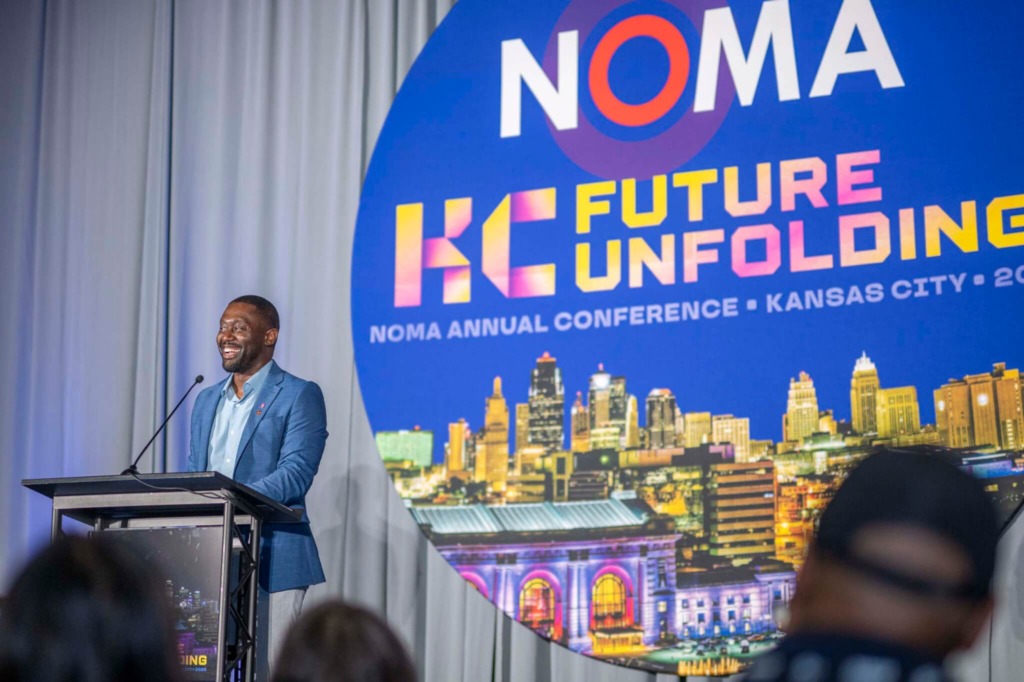
NOMA President Bryan C. Lee gave a keynote address at the recent NOMA conference.
By Bryan C. Lee, Jr. | November 20, 2025 | Architecture, National, Op-Ed, Professional Practice
The National Organization of Minority Architects (NOMA) 2025 national conference, Future Unfolding, held October 8–12 in Kansas City, Missouri, convened 1,400 professional and student members. The conference highlighted the growing impact of architects and designers of color through conversations, workshops, and events centered on equity and innovation in the built environment. In his keynote address, 2025–2026 NOMA President Bryan C. Lee Jr., emphasized the importance of reaffirming NOMA’s founding mission to serve architects of culture while confronting external pressures to scale back diversity initiatives. Lee urged members to harness their collective creativity and will to build a more just and liberated future for all communities.
Following his keynote, Lee wrote this opinion piece, an adaptation of the speech he delivered at the conference:
In the absence of an affirmative counter to the challenges we face, we are bound to repeat the very harms we seek to undo. This is why I see design as protest. Protest, much like design, requires an unyielding faith in the power and potential of a just society. It insists that no challenge is too big to confront or too small to deserve our attention.
Whitney M. Young Jr. reminded us decades ago: “It didn’t just happen… it was carefully planned.” The segregation we resist was planned. The disinvestment in our communities was planned. The spatial violence etched into our cities was planned. So too must liberation be planned.
Writer Paula Gunn Allen said the root of oppression is the loss of memory. If that is true, then the root of liberation is the relentless making and preservation of memory—in language, in stories, in place, and in culture. Memory is momentum.
Our society stands at an inflection point, as does NOMA. NOMA—and our wider professions’ strength—lies in our diversity—architects, planners, designers, students, and allied professionals. Yet we face real and pressing challenges, including communication gaps between national and local leadership in how design can aid communities, external attacks from anti-DEI efforts, and a profession still too often silent on issues of justice. Whitney Young also said: “The crisis is not in our cities… The crisis is in our hearts, the kind of human beings we are.” Our problem is not a lack of skill or resources. It is a lack of will.

Each submission gets timestamped with EST time and gets a unique identifier
assigned, example:
S10056
Your ID: S12312312
This notification means your entry was sent successfully to the system for review and processing.
If you have any further questions or comments, reach out to us via the main contact form on the site
Have a great day!
New to NOMA?
Create your account
Already have an account?
Sign in
Not A NOMA Member? Click Here!
Create your account